
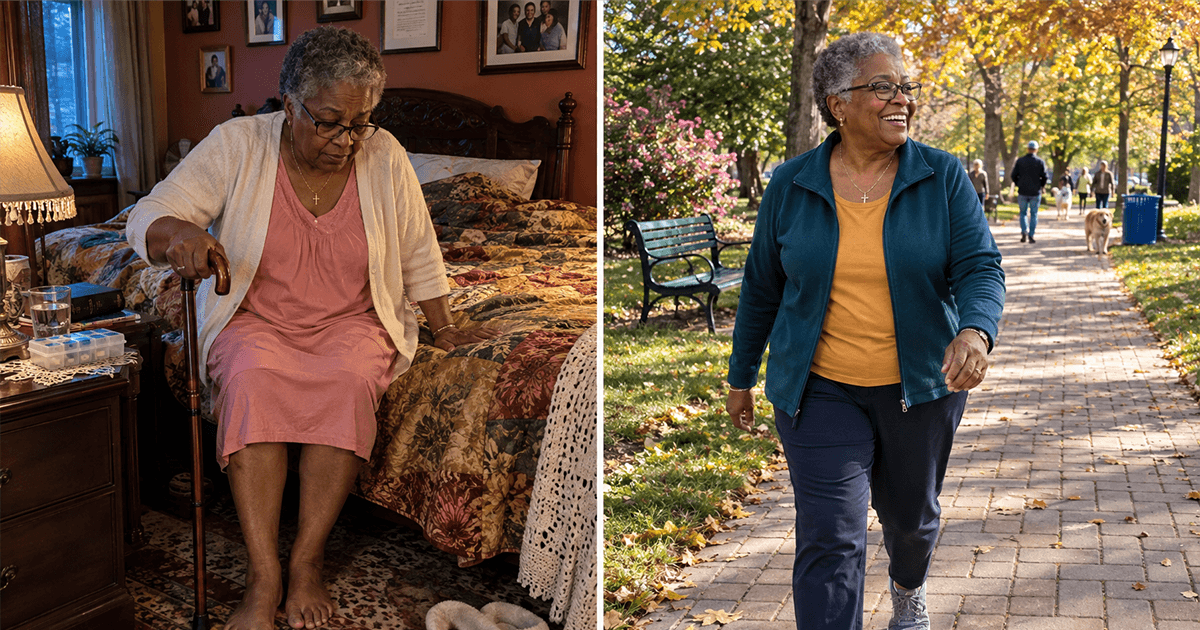
The Ancient Walking Method Thousands of Women 60+ Are Using to Feel Steady Again — No Gym, No Floor Work, Works With a Cane or Walker
I used to walk everywhere without thinking about it. Now I think about every step.
I'm 64. I've got two grandkids who want me chasing them around the yard, and knees that have other plans. Getting up off the couch takes a second longer than it used to. Stairs make me hold the railing a little tighter than I'd like to admit. Ever since I slipped getting out of the tub last winter, there's this quiet worry that follows me around — what if I fall?
I told myself this was just what getting older looks like. I wasn't trying to run a marathon. I just wanted to feel steady on my own two feet again.
Then I mentioned it to my friend Carol over tea. Turns out she'd been avoiding the same things — long walks, uneven sidewalks, even her own basement stairs.
That's when it hit me: this probably isn't just us.
Does this sound like you too?
Between me and Carol, we checked off almost every one of these. See how many sound familiar to you.
✓ You hold the railing now,
✓ Your knees or hips feel stiff
✓ You've started avoiding uneven sidewalks or grass
✓ Getting up from a low chair or off the floor takes real effort
✓ You think twice before walking somewhere alone
✓ You miss doing things you used to do without a second thought — gardening, long walks, keeping up on a family outing
Most people check off three or more of these.
We blamed it on stress. Or age. Or bad luck.
We tried walking more carefully. Taking the elevator instead of the stairs. Just... being more careful.
But what if all of these come from one simple cause?
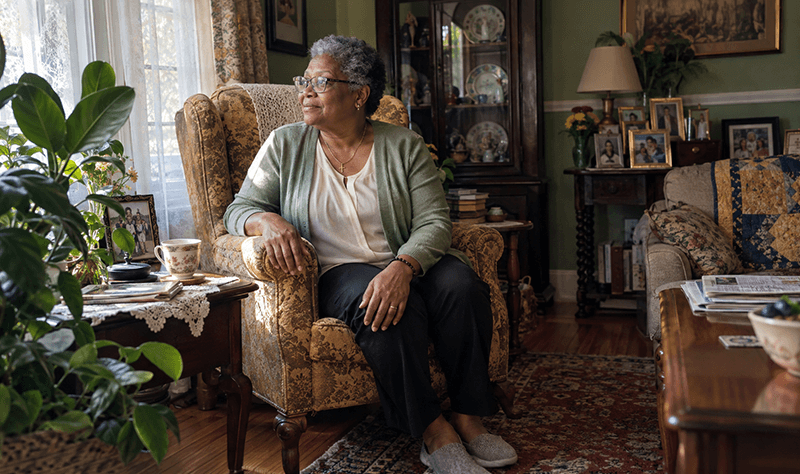
What if research shows most older adults are quietly losing the very thing that keeps them steady — and most have no idea?
The real reason your balance is changing
If two or more of those symptoms sound like you, here's what's really going on.
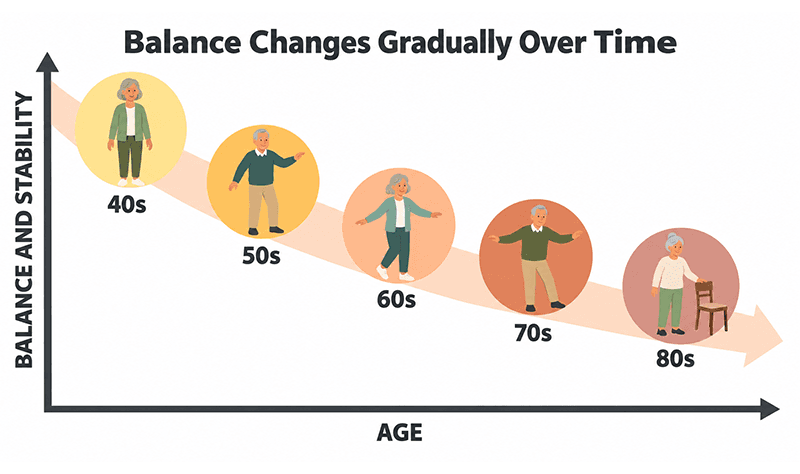
Your body has been losing the muscle and balance skill it uses to catch itself. For years. And you probably had no idea.
1 in 4 adults over 65 falls every single year in the U.S. More than half of adults over 65 also deal with arthritis, which stiffens the same joints your body relies on to catch a stumble before it becomes a fall.
Doctors sometimes call the root of it age-related balance decline. Most seniors have never heard about this — because most doctors don't bring it up until after the first fall.
Here's what it's doing to you every single year:
- It slows your reflexes. A stumble you'd have caught easily at 40 turns into a real fall at 65.
- It stiffens your joints. That's why mornings take longer and stairs feel harder.
- It shrinks your world. Without meaning to, you start avoiding stairs, uneven ground, even walks — just to stay safe.
- It feeds on itself. The less you move, the weaker and stiffer you get, which makes you move even less.
- It gets worse every year it goes unaddressed.
Think of it like a bridge slowly losing its support beams. Everything looks fine on the surface — until it isn't.
No wonder you hold the railing tighter. No wonder mornings feel stiffer. No wonder you've started saying no to things you used to do without thinking twice.
And here's the important part: this isn't about willpower, and you didn't do anything wrong. Your body has been changing — and it can be worked with.
Why "just being careful" never actually helped
This is where most older folk get stuck.
When your balance starts to feel shaky, the instinct is to just be more careful — hold the railing, skip the walk, avoid the stairs. That's exactly the trap.
Here's what almost nobody tells you: avoiding movement weakens your balance . The muscles and reflexes you need to catch yourself only stay sharp if you actually use them.
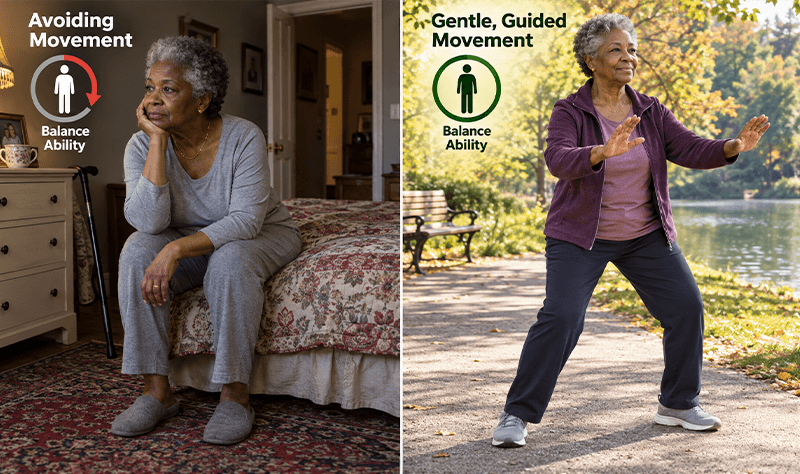
That's why the usual instincts don't work long-term:
- Avoiding stairs and uneven ground? Keeps you "safe", until it doesn’t
- "Just walk more"? Helpful, but walking alone doesn't retrain the specific weight-shifting skills that actually prevent falls.
- Waiting until after a fall to do something about it? By far the most common approach — and the most costly one.
It's not that people lack the will to stay active. They just haven't found something built for exactly this problem.
So what actually works?
The discovery that changed everything
This is where my story took a turn. Carol's too.
After months of "just being careful," I found something that finally made sense.
Researchers have studied one gentle style of movement for exactly this problem, and the results are hard to ignore. One of the largest trials ever run compared it directly against a stretching routine and a general exercise program. The result: it cut the risk of falling by 58% compared to stretching, and by 31% compared to the more intense program.
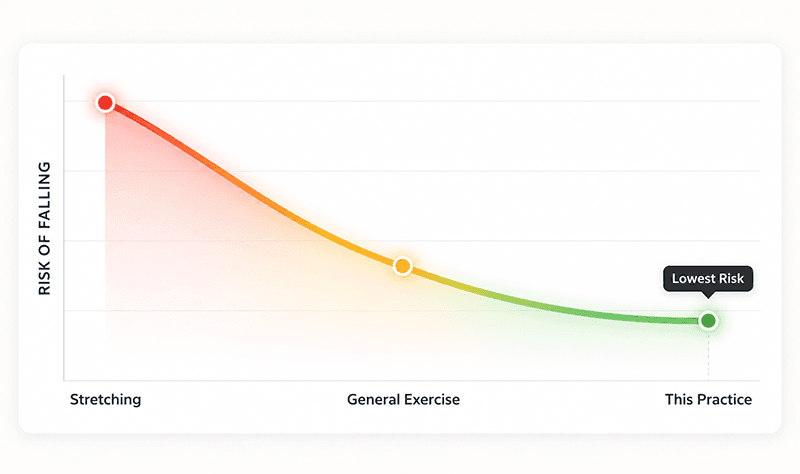
A separate review pooling more than 20 studies found the same pattern: regular practice lowered fall risk significantly and measurably improved balance, reaction time, and confidence walking on uneven ground.
That gentle movement is tai chi.
You've probably noticed something before, even if you never connected the dots: older adults across Japan and China tend to stay slim, active, and steady on their feet well into their 80s and 90s. Diet gets a lot of the credit, and it should — but look closer at daily life there and you'll spot something else. Parks full of people, every morning, moving slowly together through the same set of motions.
That's tai chi. It's an ancient East Asian practice, centuries old, and it's still done every single morning by millions of people today — many of them decades older than you'd expect, moving with a steadiness most people lose by 50. Practices that don't actually work don't get passed down for hundreds of years and survive into a culture's daily routine. This one has, for a reason.
But here's the catch: how you learn it matters — a lot.
Most people who try to pick it up from a random video get lost, feel silly, or give up because there's no clear plan and no sense of progress.
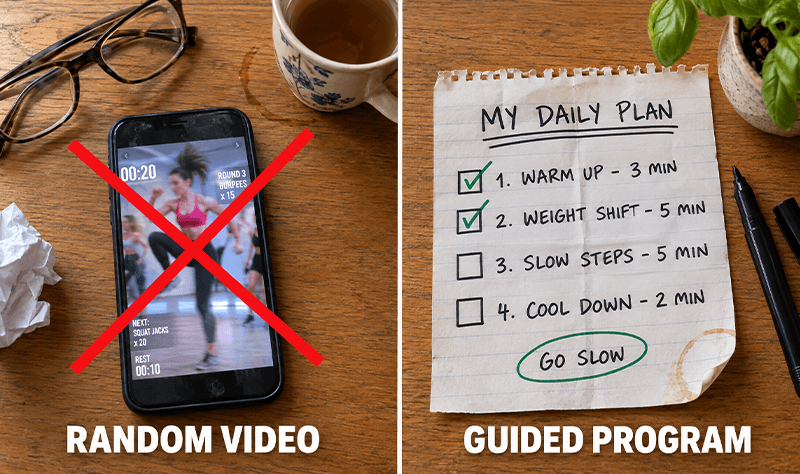
Structured, step-by-step tai chi programs consistently show something different: when the movements are taught in a clear progression, at a safe pace, people actually stick with it — and their balance keeps improving month over month.
That's the piece almost every YouTube tai chi video gets wrong. It's not the movements. It's the missing structure.
The two-part method helping thousands of older adults feel steady again
Remember Carol?
She learned that better balance is only half of it. Staying steady in real life — on stairs, on grass, getting out of a chair — takes more than one thing.
That's why the most effective approach uses two things together:
First: Guided tai chi walking. This is your foundation.
Slow, weight-shifting movements adapted for real bodies — no jumping, no kneeling, no floor work. Built to work seated, standing, or with a cane or walker if you need one. Built to scale from complete beginner.
Second: The daily confidence snowball. This is your multiplier.
As your balance improves, so does your confidence — which means you naturally do more of what you used to avoid: stairs without the railing, a walk on the grass, keeping up on a family outing. That's where the real change happens.
Together, they're why this works when "just being careful" didn't.
Barbara Ellison discovered this after a fall put her in the hospital with a hip fracture.
"After my fall, I was terrified to walk anywhere alone. My daughter found this for me. Six weeks in, I got up from my garden without grabbing anything for support — first time in two years I didn't think twice about it."
While others keep avoiding the things that actually strengthen their balance, the gap just keeps growing.
Finally, a method built for exactly this
Remember that research — the one showing this practice cut falls by more than half compared to stretching?
One team built that exact approach into a full program: guided, step-by-step tai chi walking, made specifically for people 60 and up.
It's called FitFlow. I took the quiz that same week.
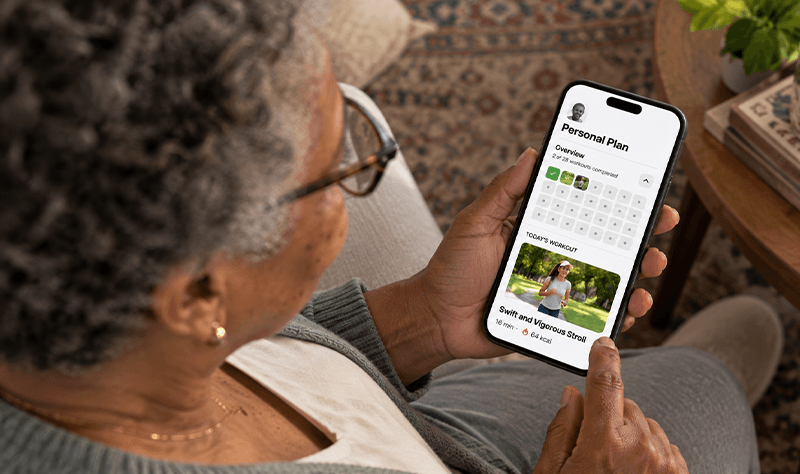
It's helping thousands of older adults feel steady on their feet again.
Unlike a random video or a class that moves too fast, FitFlow gives you a clear, step-by-step plan that adjusts to your pace — no jumping, no kneeling, no floor work, and no pressure to keep up with anyone else.
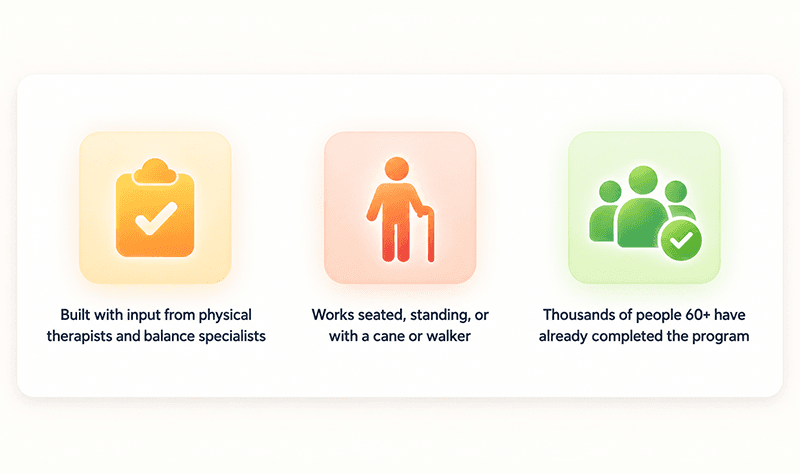
Best part? Each session is just 5 to 15 minutes. Built to fit into a life that's already full, not replace it.
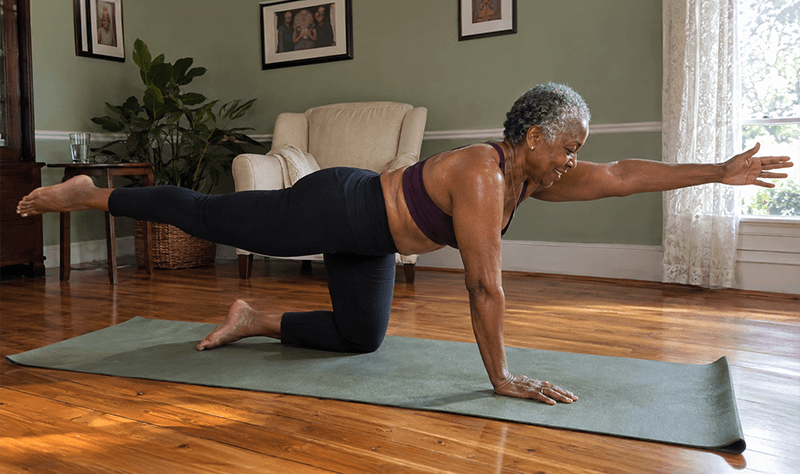
"I was scared tai chi would be too slow to matter, or too hard to learn at my age. It's neither. Four months in, and I got out of my car in a parking lot without holding onto the door — first time in years."
Joan T. | Verified User. Results may vary.
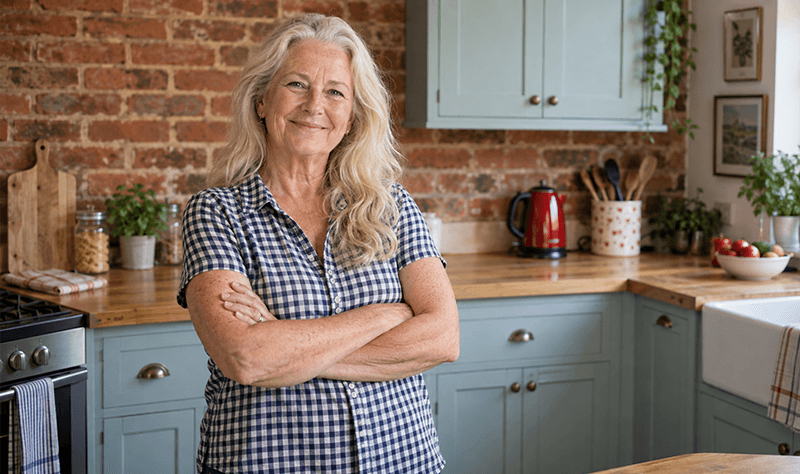
"The sessions are short enough that I actually do them. I've quit two other 'senior fitness' apps because they moved too fast. This one meets me where I am."
Eleanor R. | Verified User. Results may vary.
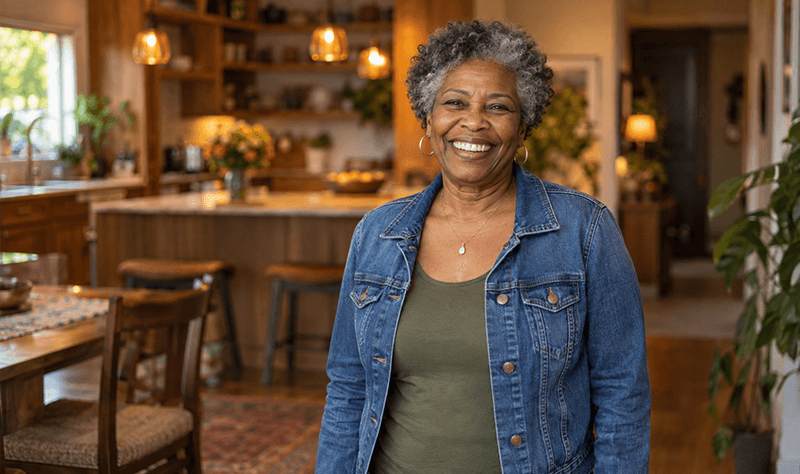
"I didn't expect the confidence. I'm not white-knuckling the railing anymore. I just... walk. Down to the mailbox, around the block, into my garden."
Margaret S. | Verified User. Results may vary.
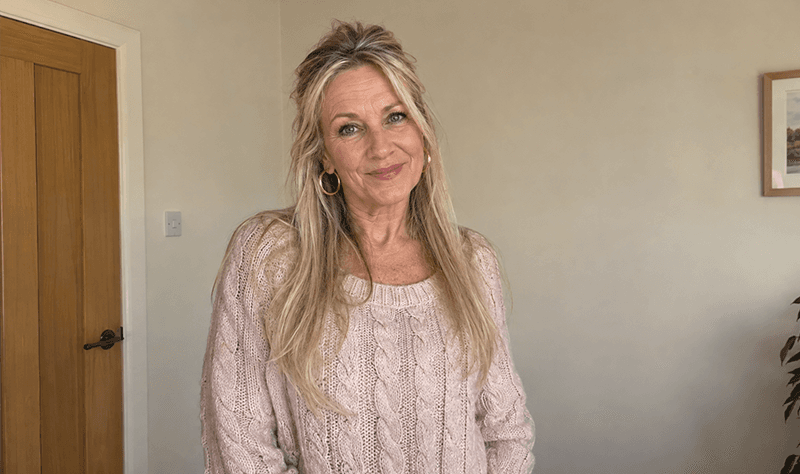
Here's what nobody told me before I started
When you start moving again after being cautious for a while, your body needs a little time to adjust.
Some mild stiffness the first few days is normal. It doesn't mean anything's wrong.
If you're worried tai chi will be "too much" or too hard to learn: it isn't. Every session is built for beginners, and every movement can be done seated if you need it to be.
Most people notice steadier footing within the first couple of weeks. Real confidence — walking without thinking about it — usually shows up by week three or four. That's exactly how it went for me.
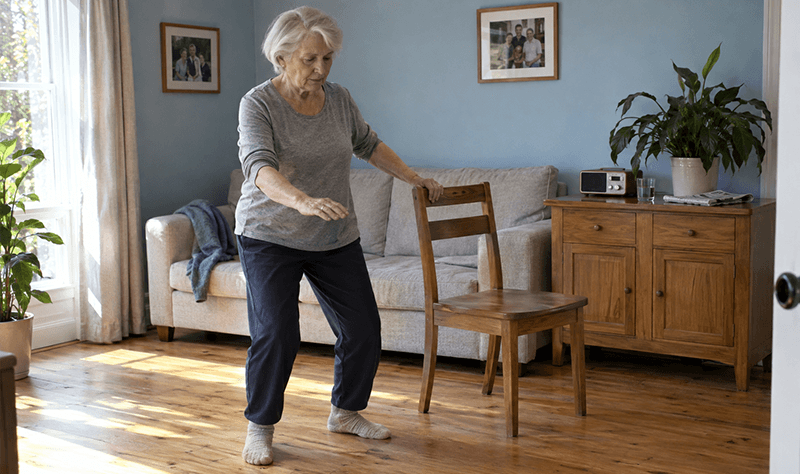
See the personalized plan recommended by experts
Take the QuizResults may vary due to personal features
Your body is trying to tell you something
I ignored these signals for months. I don't want you to do the same.
Right now, your body is sending you signals.
These symptoms aren't random.
They're not "just getting older."
Your balance is losing ground, year after year.
Every year you wait:
- The fall risk adds up. 1 in 4 doesn't sound like much — until it's you.
- Your world keeps shrinking. Fewer walks, fewer stairs, fewer things you used to do without thinking.
- Your confidence keeps eroding.
- The gap between how steady you feel now and how steady you used to feel keeps growing.
But picture walking without holding the railing. Not hesitating at the bottom of the stairs.
Gardening again without worrying about getting back up. Keeping up on a walk with your family — without the quiet fear trailing behind you.
Feeling steady again — not someday, but soon.
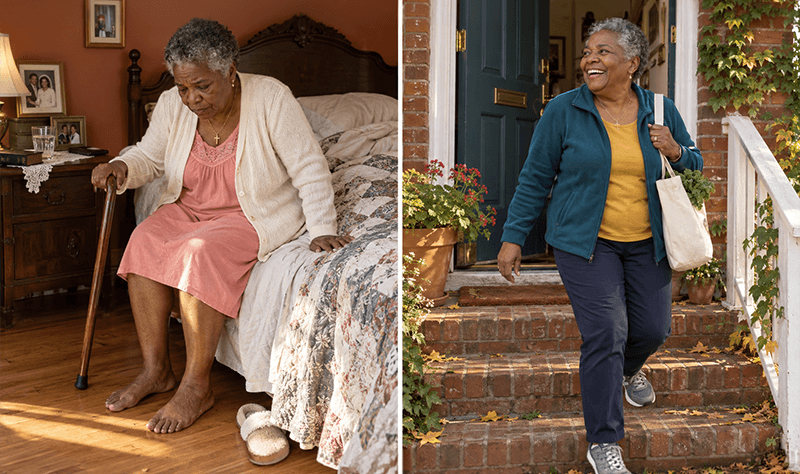
See the personalized plan recommended by experts
Take the QuizResults may vary due to personal features
The choice that changed everything
I made my decision after months of feeling like this was just my life now.
"I'd already tried a senior exercise DVD and a balance class that moved too fast for me. What's one minute to take a quiz? I had nothing to lose."
Ten days in, I noticed I wasn't gripping the railing as hard.
Three weeks in, I walked to my mailbox without thinking about it first.
Carol started the same week I did. Three months later, we still send each other photos from our morning walks.
"I don't feel like I'm one wrong step away from disaster anymore. I feel steady. Honestly more confident on my feet than I've felt in ten years."
Results may vary.
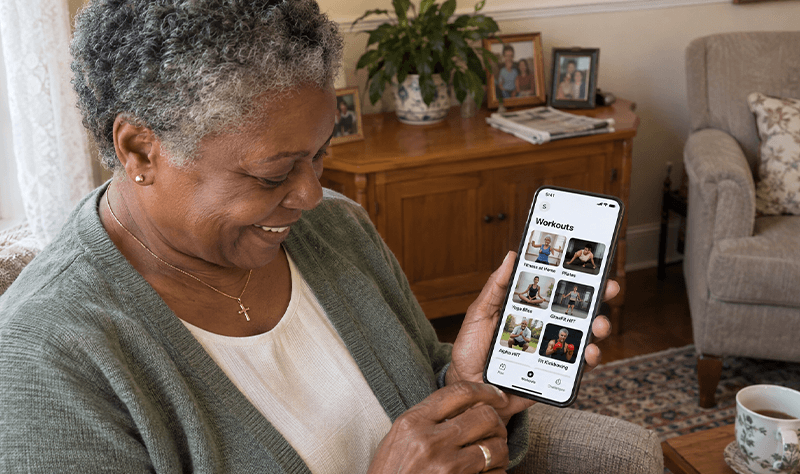
See the personalized plan recommended by experts
Take the QuizResults may vary due to personal features
It's time to feel steady again
I waited months before I did anything about mine. I don't want you to wait that long.
That balance won't rebuild itself.
It's been declining for years. It won't slow down on its own.
You can keep holding the railing a little tighter every year.
Or you can rebuild what's actually causing it.
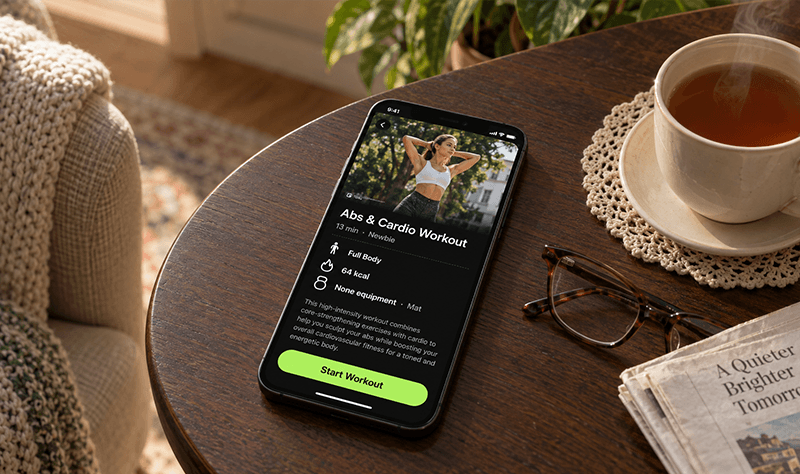
It starts with one free quiz — one minute, no commitment — that builds your plan around your age, your mobility, and where you're starting from.
Don't wait for a fall to find out what's actually been happening.
Take the quiz today. No equipment. No gym. Just a few minutes a day, starting with your own personalized plan.
See the personalized plan recommended by experts
Take the QuizResults may vary due to personal features
P.S. I wish someone had told me this a decade ago. Falling isn't just bad luck — the CDC says 1 in 4 adults over 65 falls every year.
Tai chi is one of the few things studied enough to actually change those odds: in the largest trial on record, it cut fall risk by more than half compared to stretching alone.
FitFlow's guided program brings you that same ancient, gentle practice, at your own pace, with no floor work and no equipment.
If you checked off 3 or more symptoms above, this is likely why. Take the free quiz today and see your plan.