
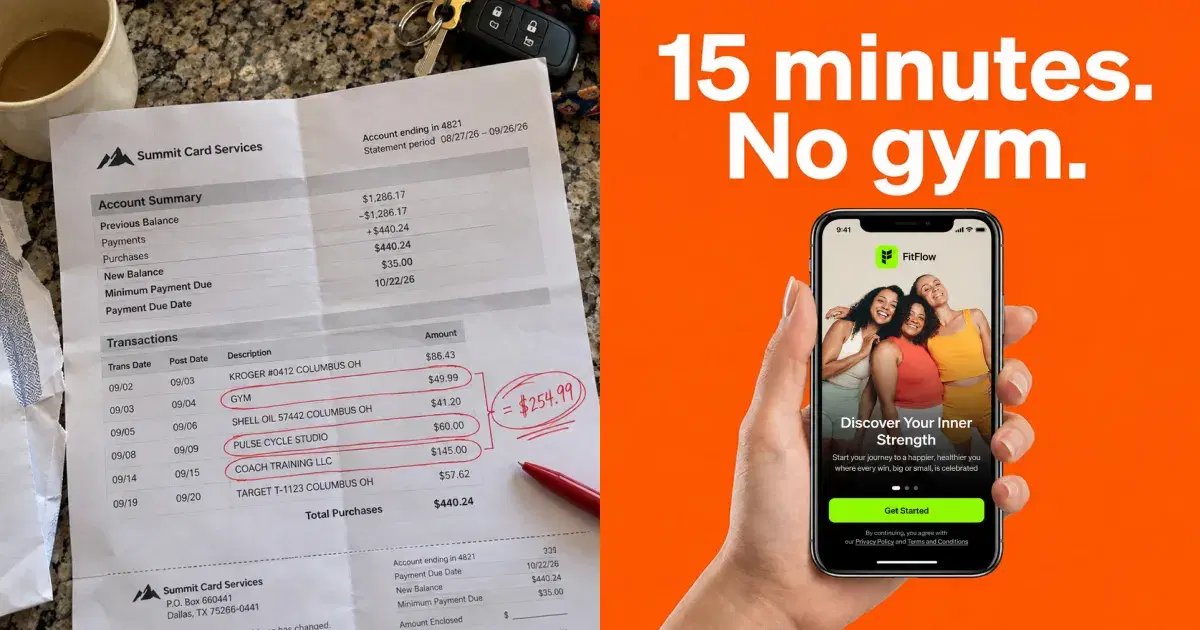
See the personalized plan recommended by experts
Take the QuizResults may vary due to personal features
Everyone Says You Need a Gym to Get Strong. They're Wrong.
Once you hit 40, everyone tells you the same thing: your body is changing, so you need to get serious. Join a gym. Machines. Weights. Classes. A trainer.
Here's the truth nobody in the fitness industry wants you to hear: you don't.
Your muscles don't know if they're in a $5,000 machine or on your living-room rug. They only know one thing — whether they're being challenged.
That's it.
But the gym? The gym needs you to believe you can't do it without them. Because that belief is worth a lot of money.
And it costs you two things you don't have much of: time and money.
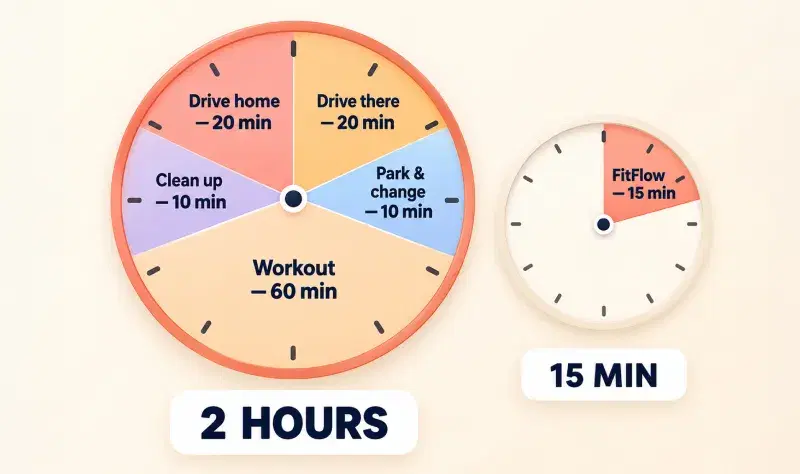
Let's start with time. Here's what "going to the gym" really looks like for a mom over 40:
- 20 minutes to drive there (after you find your keys and your other shoe)
- 10 minutes to park, change, and wait for a machine
- 60 minutes to actually work out
- 10 minutes to clean up
- 20 minutes to drive back home
That's two hours. For one workout.
Do that three times a week and it's six hours. Every month, that's about 25 hours — a full work week — just to "stay in shape."
Now be honest. Who has that? With a job, kids who need rides, dinner to make, homework to check, and maybe a parent who needs you on weekends?
Nobody. So you skip. Then you feel guilty. Then you skip again.
And then there's the money. This is where it gets ugly.
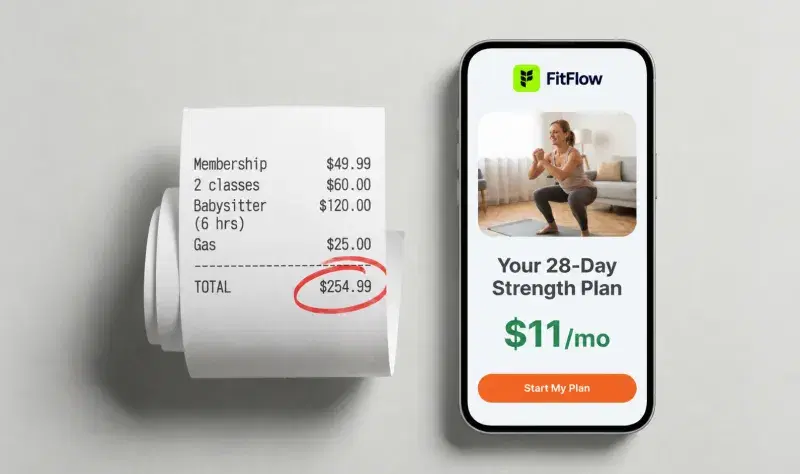
Here's what getting strong the "normal" way really costs:
- Gym membership: $30–$60 a month — plus a sign-up fee and a surprise "annual fee"
- Classes: $25–$35 each, because the gym floor is confusing
- A personal trainer: $60–$100 an hour, because you don't know what to do on those machines (more on this trap in a second)
- A babysitter: around $20 an hour, because someone has to watch the kids for those two hours
- Gas, gym clothes, shoes, a water bottle, a lock...
Add it up, and a lot of women are spending $200 or more every month. That's over $2,400 a year.
And there's one more trap nobody warns you about: the trainer loop.
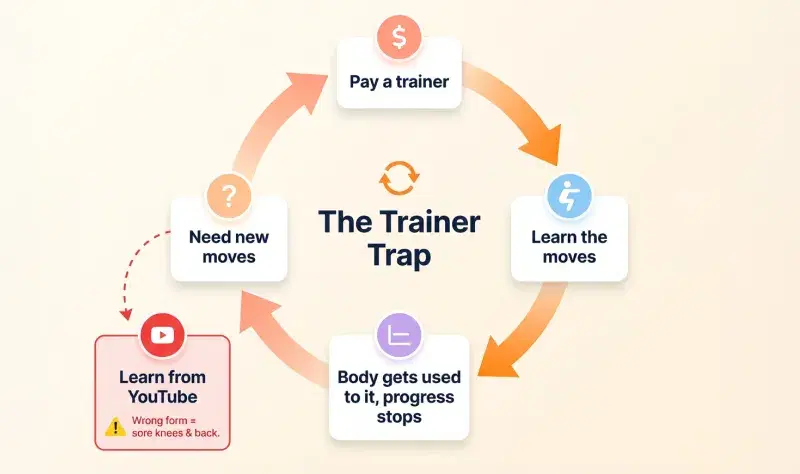
Say you do the "smart" thing. You pay a trainer for a few sessions, learn the moves, and then go it alone to save money.
It works — for a few weeks. Then it stops.
Here's why. Your muscles adapt. Do the same routine over and over, and your body gets used to it. It stops changing. To keep getting stronger, your workouts have to get harder and switch things up over time.
Which means new exercises. Which means learning them all over again.
So you've got two choices:
- Pay the trainer again — and again, and again, every time you need a new routine.
- Learn it yourself from YouTube — and hope you're doing it right. Learn a squat or a lunge the wrong way, and after 40, it's your knees and lower back that pay for it.
Either way, you're stuck thinking about sets, reps, which moves to do, when to make them harder, and whether you're doing them right. On top of everything else you already have to think about.
It's a hassle. And it's exactly why so many of us quit.
But there's a much simpler way to do this. I'll get to it in a minute.
And here's the part that really got me. Researchers at UC Berkeley studied real gym members who paid about $70 a month. On average, they went just over 4 times a month. That's roughly $17 a visit — more than if they'd just paid at the door each time.
In other words, a lot of gyms make their money from the people who don't show up. They're counting on you being too busy.
So you end up paying the most money for the workouts you never do. That's the gym lie.
I'll admit it. The fitness marketing got me, too. I've had three gym memberships, one "unlimited" boutique class pack, and a personal trainer I paid for twice before I stopped going.
Every time, I told myself this was the one. Every time, life got in the way — work, two kids, a mom who needs help on weekends.
And every month, the charge still came out of my account.
How I Quit the Gym and Got Stronger at Home: Introducing FitFlow
I kept paying for a gym I barely used for years. I could see my body changing — softer arms, a belly that wasn't there before, less energy by 3pm — and I kept thinking, "I'll go next week."
Now, here's the funny thing — I'm stronger today than I've been in ten years, and I haven't set foot in a gym once.
I wish I could say I figured this out myself, but alas...
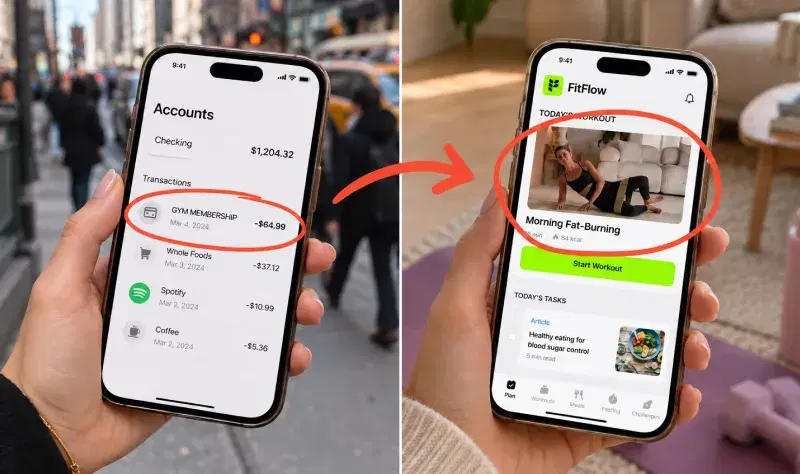
I saw an ad for FitFlow's military-style workouts for women over 40. And honestly? I was in full skeptic mode.
A full strength plan, built for my body, no gym, no equipment, just 15 minutes a day — for less than one class at my old studio?
With my gym history, I wasn't going to let good marketing fool me again. So I went researching.
A Real Strength Plan for Less Than a Coffee a Week? FitFlow Makes Gym Prices Look Ridiculous
You know the saying — if something sounds too good to be true, it probably is.
So first, I wanted to know one thing: can you actually build real muscle without a gym?
Turns out, yes. Your muscles don't know the difference between a $5,000 machine and your own bodyweight. They just know they're being challenged.
One study even compared push-ups to the bench press. When people made their push-ups harder over time, they gained about the same muscle and strength as the group using weights.
It makes sense when you think about it. The military has built strong bodies with nothing but push-ups, squats, lunges, and planks for over 100 years. No machines required.
Next, the price. Here's a quick comparison I made:
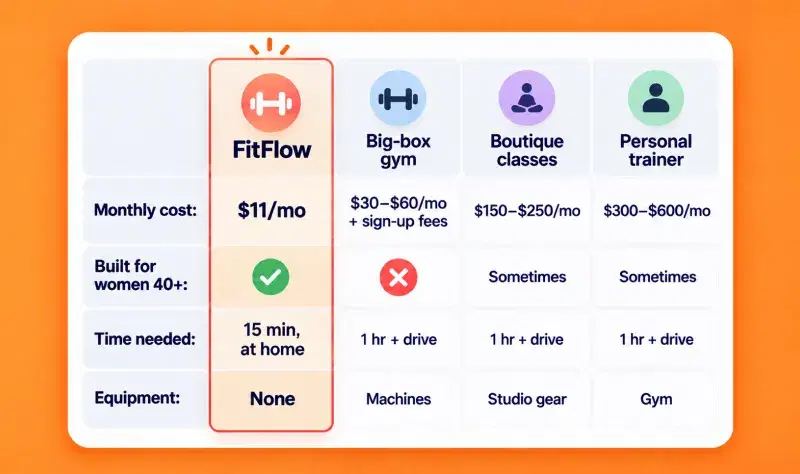
Okay — the value is clear. But what about hidden fees? I've been burned by sign-up fees, "annual maintenance" charges, and cancellation phone calls before.
So I held my excitement and went through the quiz and the checkout page.
This is where I got curious: no sign-up fee, no equipment to buy, no annual contract. What you see is what you get.
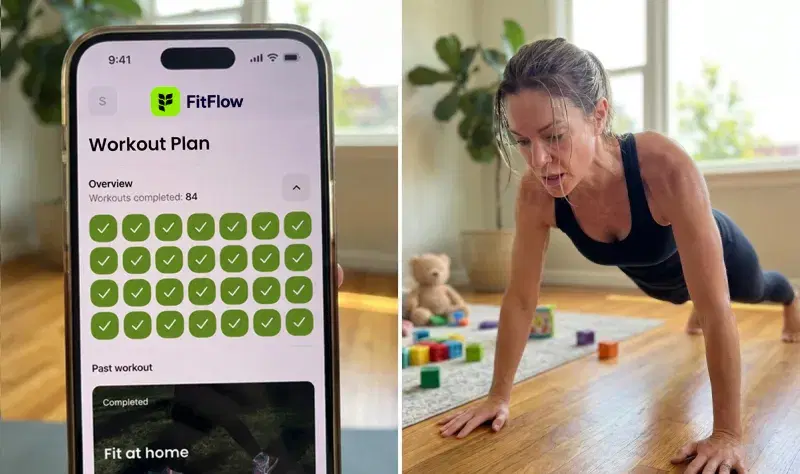
So I signed up, did my first workout that same night, and I've been using it for over three months now. My experience has only been positive — but more on that in a bit.
See the personalized plan recommended by experts
Take the QuizResults may vary due to personal features
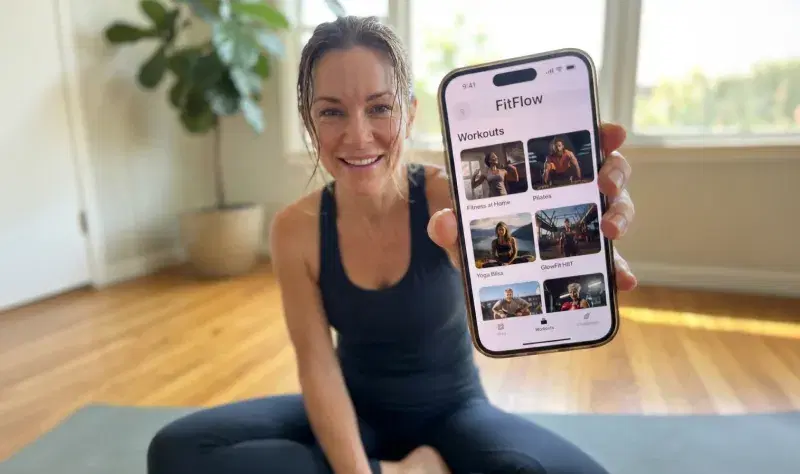
But How Does FitFlow Keep It So Cheap — and Still Work?
But one question kept bugging me, even a few weeks in.
How does FitFlow keep the price so low? Is there a catch?
The answer is simple. FitFlow was built from day one around what actually works for women over 40 — bodyweight strength training at home — and nothing else.
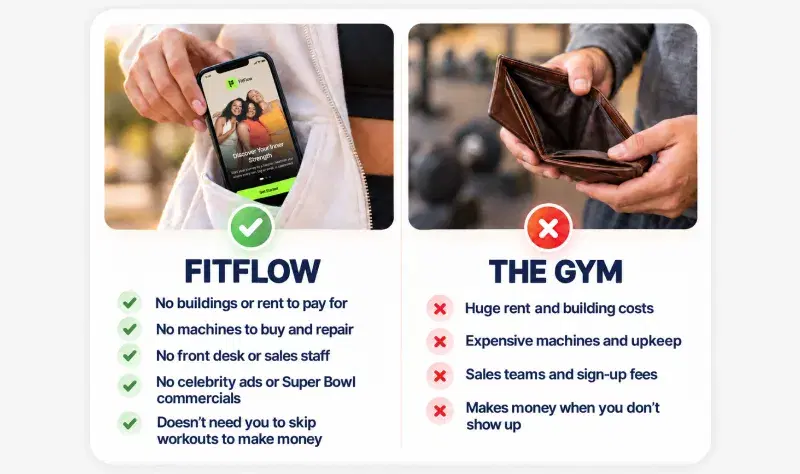
FitFlow:
✓ No buildings or rent to pay for
✓ No machines to buy and repair
✓ No front desk or sales staff
✓ No celebrity ads or Super Bowl commercials
✓ Doesn't need you to skip workouts to make money
The gym:
✗ Huge rent and building costs
✗ Expensive machines and upkeep
✗ Sales teams and sign-up fees
✗ Makes money when you don't show up
This simple model is how FitFlow keeps costs low and passes the savings on to you. And because the plan is built for your body and fits into 15 minutes, you actually use it — which is the whole point.
See the personalized plan recommended by experts
Take the QuizResults may vary due to personal features
My Ultimate FitFlow Test: Setup & Real Life
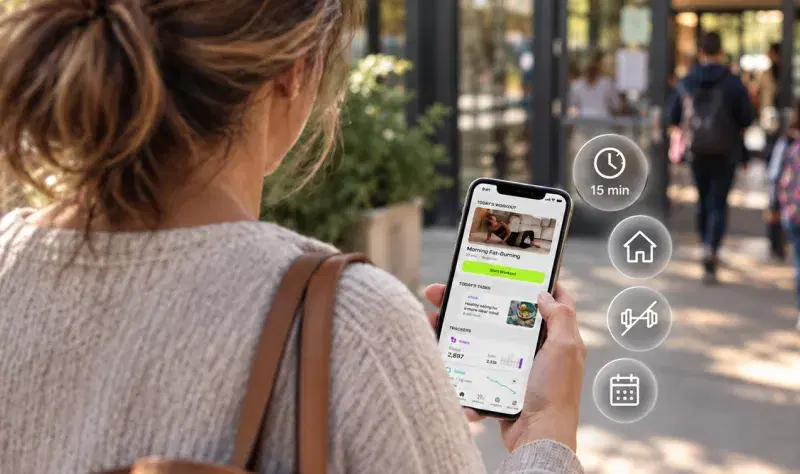
It's great to know why FitFlow is so affordable. But that doesn't mean much if it doesn't work.
For me, the real test was simple: would I actually stick with it — with a job, two kids, and zero free time?
First, the setup. I figured it would be complicated. I was wrong.
Getting started with FitFlow is easy.
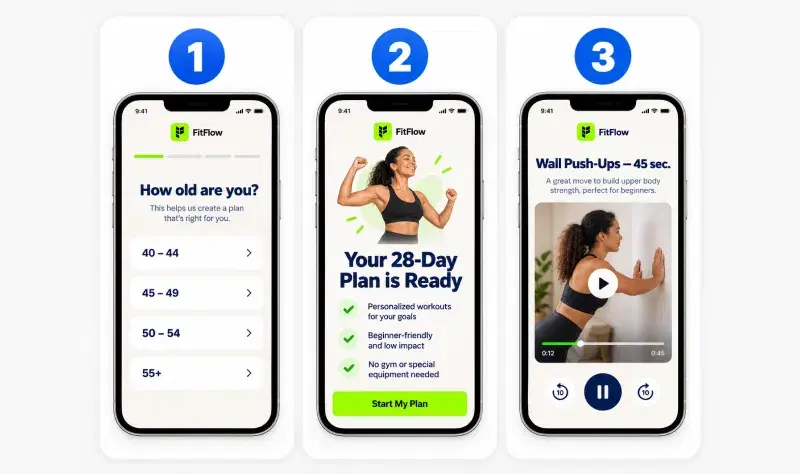
I took a 1-minute quiz about my age, my goals, my fitness level, and my bad left knee. Then I got my plan. Then I pressed play.
It really is as simple as that.
Every workout has an easier version of every move — wall push-ups instead of floor push-ups, chair squats instead of deep squats. I started with the easiest ones. No shame, no yelling.
And remember the trainer loop? This is where it ends.
FitFlow builds the plan for you — around your age, your level, and your bad knee or stiff back. Every move comes with a short, clear video showing exactly how to do it. And as you get stronger, the plan gets harder and switches up the moves on its own, so your body never gets stuck.
No trainer to rebook. No guessing what to do next. No wondering if you're doing it wrong. You just press play for 15 minutes.
Real Strength, More Energy, No Skipped Workouts
That's the setup. My other worry was whether it would actually do anything.
Because I've done plenty of workouts that left me sweaty but didn't change a thing.
Here's what my weeks looked like:
- Before the school run: 15 minutes on the living-room rug while the coffee brewed.
- On a work trip: a hotel room, no gym, no problem.
- On a bad-knee day: the app swapped in knee-friendly moves.
So, how did it go?
Well, I'll tell you one thing — by the end of week two, I wasn't reaching for my third coffee at 3pm anymore.
Editor's note: I forgot to mention — I added up what I spent on gyms, classes, and a trainer over the last five years. It came to just over $6,000. For maybe 40 real workouts. With FitFlow, I did more workouts in my first month than I did in my last year at the gym.
That energy boost wasn't in my head, either. A University of Georgia study found that people who started a simple, easy workout routine got 20% more energy and 65% less tiredness — often within weeks.
And more energy did something I didn't expect. I started moving more all day — taking the stairs, walking the dog longer, not collapsing on the couch at 6pm.
Researchers have seen this too: active people burn over 800 extra calories a day just from everyday movement, compared to about 640 for people who sit most of the day. Stronger body → more energy → more movement → more calories burned. It snowballs.
Three months in, I can do 15 real push-ups. I couldn't do one when I started. My jeans fit again. And I'm eating normal food.
The Only Catch (And Why It's Not a Big Deal)
I have to be honest — there are a couple of catches.
First: you do have to show up for 15 minutes.
FitFlow isn't magic. It won't work from your phone's home screen. But 15 minutes is a lot easier to find than an hour at the gym plus the drive.
Second: the first week, you'll probably be sore.
If you haven't trained in years, your muscles will notice. That's normal — it means they're waking up. It fades fast.
On the flip side, real strength and body changes take a few weeks. Most women feel more energy in the first 1–2 weeks, and see real changes by week 3–4. That's how it went for me.

Final Verdict: Ditch the Gym Fees, Get Your Strength Back
To wrap up this FitFlow review, here are the key takeaways. FitFlow is a simple, military-style home strength plan made for women over 40 — and it's ridiculously well priced for what it does.
Compared to gyms, classes, and trainers, it costs just a fraction of the price, with no sign-up fees, no equipment, and no drive.
So if your goal is to get strong, feel energized, and stop paying for workouts you don't do, FitFlow is definitely worth a shot.
Personally, it's become part of my morning, like brushing my teeth.
Now is the perfect time to try it. Take the free quiz, see your plan, and start your first 15-minute workout tonight.
See the personalized plan recommended by experts
Take the QuizResults may vary due to personal features
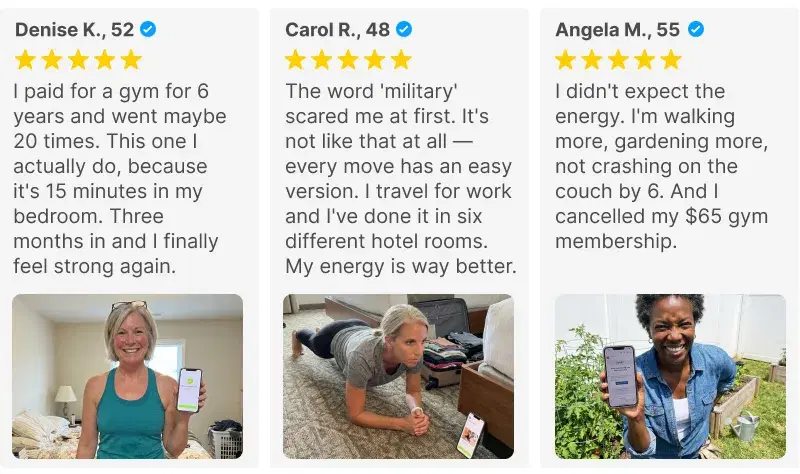
Check out other user reviews just like this one:
Ready to Get Strong Again — Without a Gym?
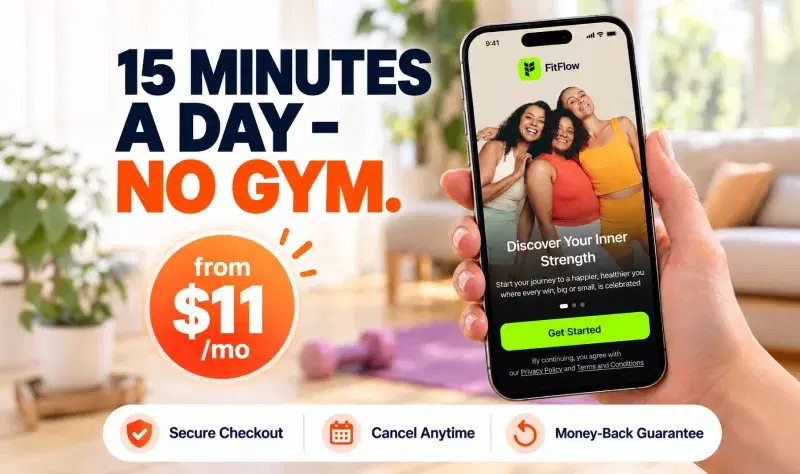
Start with a free 1-minute quiz and get your personal plan today
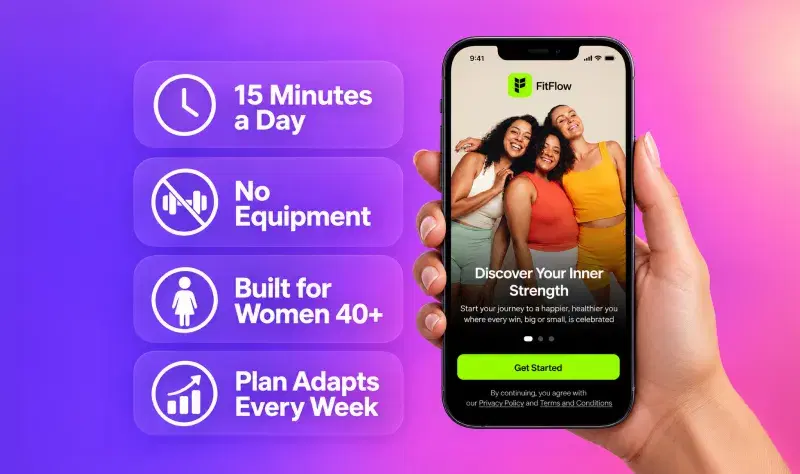
✅ 15-minute workouts — fits your busiest day
✅ No equipment — just you and your living room
✅ Built for women 40+ — every move has an easy version
✅ Knee- and back-friendly options — train around old injuries
✅ A plan that grows with you — a little harder each week
✅ No gym, no drive, no sign-up fees — simple, clear pricing
✔ Works on any phone
✔ New plan every week
✔ Friendly customer support
See the personalized plan recommended by experts
Take the QuizResults may vary due to personal features
Your Free Plan Is Waiting — Take the Quiz While It's On Your Mind
You're in luck. It takes one minute to see exactly where you're starting — and what your first 15-minute workout looks like.
See the personalized plan recommended by experts
Take the QuizResults may vary due to personal features