

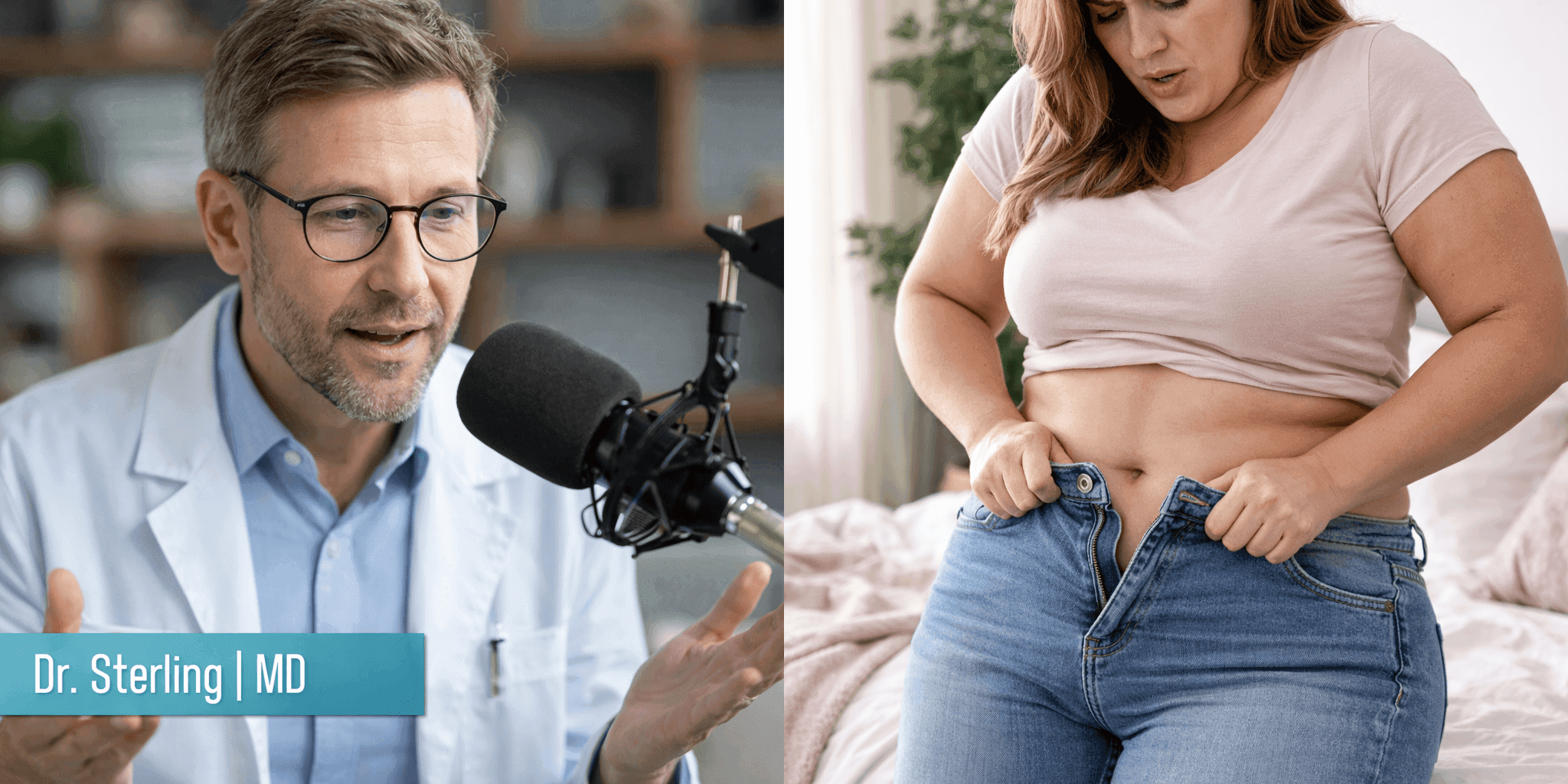
An expanding midsection. Puffy upper arms. Persistent weight in the hip area. Regardless of what changes you're experiencing, the frustration can feel overwhelming.
"I witness this daily," says Dr. Rachel Sterling, MD, Endocrinology. "Hormonal shifts cause profound metabolic changes, and nearly half of adults struggling with stubborn weight are dealing with hormonal fat accumulation."
In response, countless people do precisely what they're advised to do. They monitor calories. Challenge themselves through workouts. Some even explore various hormonal therapies. Yet still, the numbers on the scale remain unchanged.
"Despite common assumptions, the issue isn't inadequate willpower," Dr. Sterling clarifies. "It's a biological mechanism that most people haven't been educated about."
Scientists from prestigious institutions, including Harvard, have consistently documented cortisol — the body's main stress hormone — as a contributor to fat storage. More troubling still, cortisol concentrations typically increase with chronic stress and age, rendering weight reduction progressively challenging.
"This is precisely why cortisol management is central to my approach," says Dr. Sterling. "But here's what's critical — attempting to 'correct' cortisol incorrectly can elevate it further and intensify weight accumulation."
Overlooking cortisol doesn't merely prevent fat reduction — it initiates a metabolic cascade that's remarkably challenging to reverse.
How Cortisol Silently Conditions Your Body for Fat Retention
Cortisol's fundamental function is survival. "When your brain detects a threat, cortisol mobilizes to ready your body," Dr. Sterling clarifies. "Among its primary functions is elevating blood glucose."
During genuine emergencies, this proves beneficial — it energizes your muscles and enhances mental clarity for rapid response.
The challenge? Contemporary stress isn't physical threats. It's relentless notifications, disrupted sleep, psychological tension — and even erratic meal patterns.
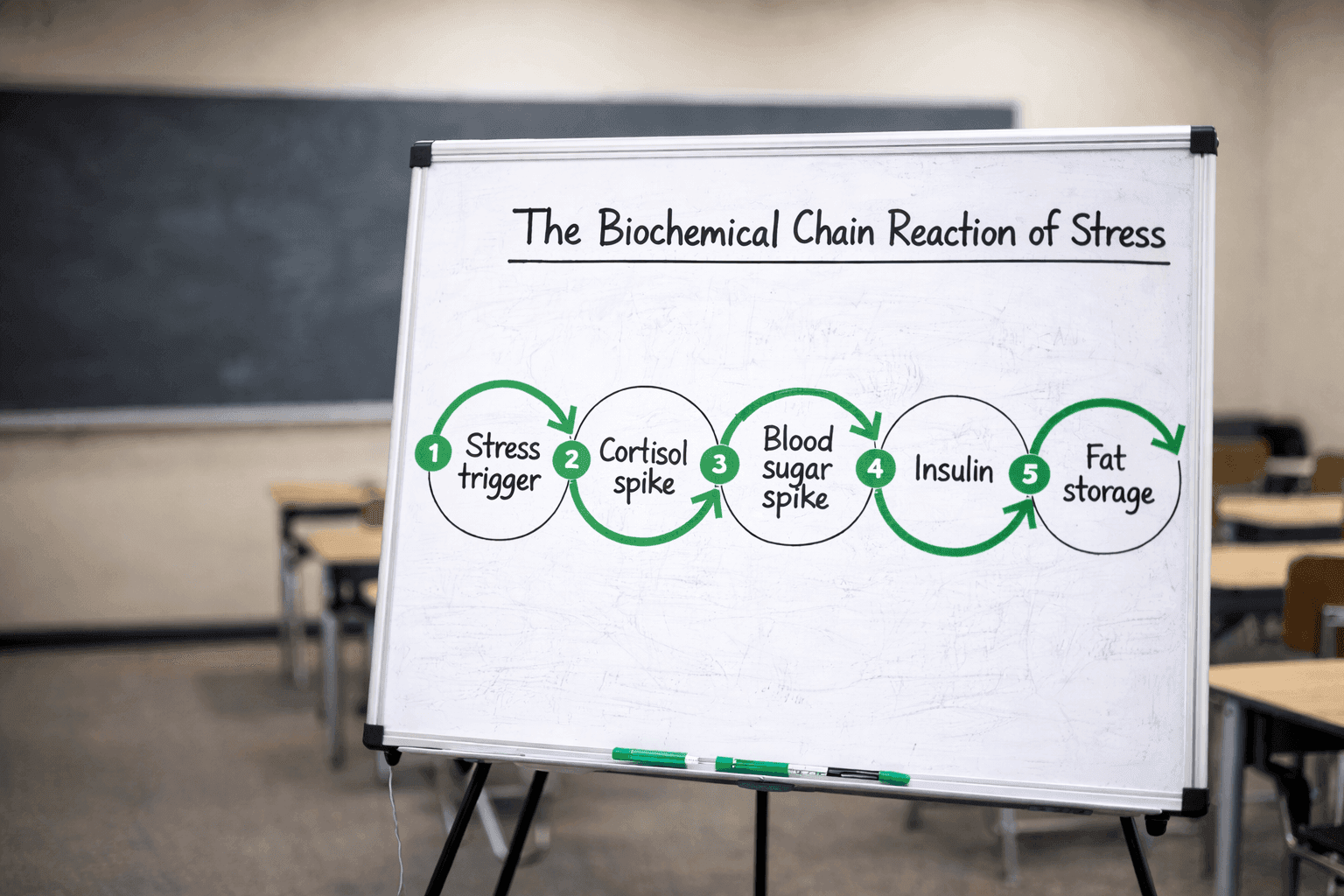
"These daily stressors activate the identical hormonal cascade," says Dr. Sterling. "And when the glucose discharged into your circulation isn't utilized, your body converts it to stored fat."
The Insulin-Cortisol Pattern That Maintains Stubborn Weight
To regulate elevated blood glucose, your body secretes insulin. However, when cortisol-triggered surges occur repeatedly, insulin gradually loses its potency. This is how fat accumulation slowly shifts into your body's standard operating mode.
"That's precisely why cortisol regulation is essential," Dr. Sterling emphasizes. As cortisol stays chronically elevated, it simultaneously undermines broader hormonal equilibrium — increasing vulnerability to serious conditions, including diabetes, heart disease, and even mental decline.
Why Traditional Weight-Loss Methods Fail People with Hormonal Imbalances
Most weight-reduction strategies are built for bodies that behave consistently. When dealing with hormonal disruption, your body operates differently.
"Hormonal imbalances mean your body responds uniquely to stress, meal scheduling, rest quality, and physical activity," Dr. Sterling notes.

"What works for metabolically healthy individuals may directly undermine your progress." Practices that benefit others may actively work against you:
- Severe calorie restriction elevates cortisol
- Excessive training amplifies stress hormones further
- Hormone treatments frequently target symptoms rather than underlying factors
- Costly injection protocols don't address the foundational cycle
"This explains why countless people remain frustrated despite following all the 'correct' steps," Dr. Sterling observes.
Research Reveals How to Trigger the "Stress Hormone Reset" — But Timing Is Everything
"You've probably encountered this method previously," says Dr. Sterling. "Some have attempted it — with disappointing outcomes."
The problem isn't the technique itself. It's the execution. "When implemented incorrectly, it elevates cortisol rather than reducing it," he clarifies. "And that can eliminate weeks of advancement within days."
When executed properly, though, the method is remarkably straightforward. "It centers on calculated intervals between meals — extended enough to settle cortisol, yet brief enough to prevent physiological stress," says Dr. Sterling.
This technique is recognized as intermittent fasting — but not the radical protocols circulating online. "We're discussing a hormonally-optimized, evidence-supported framework," he specifies. "That's why strategic eating windows have emerged as one of the most dependable approaches for enabling fat reduction."
Scientists at King's College London recently analyzed a fasting-centered protocol and discovered it reliably decreased cortisol concentrations in adults with elevated stress hormones, with greater consistency than anticipated.
Intermittent fasting can be adopted without pharmaceuticals, dramatic lifestyle overhauls, or adverse reactions. "What distinguishes this approach is its reliability," Dr. Sterling says. "It performs exceptionally well relative to intense interventions like cold immersion or hormonal adjustments — and it's considerably more sustainable."
The Critical Difference Between Reducing Cortisol — and Worsening It
There exists, however, an important qualification.
Important
Intermittent fasting delivers results only with precise application. Even minor errors in timing or food selection can reverse progress — potentially elevating cortisol rather than reducing it and accelerating weight gain.
"Intermittent fasting delivers results only with precise application," says Dr. Sterling, referencing findings from Seoul National University College of Medicine. "Even minor errors in timing or food selection can reverse progress."
The solution involves synchronizing with your unique hormonal pattern — something standardized guidance cannot achieve. "This is why numerous attempts don't succeed," he clarifies. "They lack personalization."
To resolve this, Dr. Sterling directs readers to a brief evaluation at the article's conclusion. It assesses behaviors, schedules, and metabolic indicators — then creates a protocol customized to specific requirements.
"I've witnessed the consequences of bypassing this crucial step," he says. "That's why I've streamlined the starting process."

Why the Proper Protocol Feels Surprisingly Manageable
"It's also considerably easier than anticipated," Dr. Sterling adds. "With proper direction, extreme fasting becomes unnecessary."
Instead, the emphasis is on a maintainable pattern: modestly extended intervals between meals and reduced daily eating occasions.
Pro Tip
You don't need extreme fasting to see results. A sustainable approach — modestly extended intervals between meals and fewer daily eating occasions — is enough to help cortisol and insulin stabilize naturally.
"I've observed people reduce 10, 20 — even 50 pounds," he says. "Not through increased effort, but by finally synchronizing with their hormonal systems."
In certain instances, transformation occurs so rapidly that he counsels patients to moderate their pace. "Once cortisol and insulin stabilize, the body organically rediscovers equilibrium," Dr. Sterling clarifies. "That's when I advise them they can discontinue structured fasting and resume conventional eating patterns — without weight rebound."
See the personalized plan recommended by experts
Take the QuizResults may vary due to personal features